There is a quiet discipline to a well-designed bathroom. It is not assembled—it is composed. Light is controlled, materials are resolved, and every element sits in deliberate alignment.
A Space of Retreat
In contemporary residential architecture, the bathroom has become a space of retreat—less about utility, more about atmosphere. The most compelling outcomes are not defined by fittings or trends, but by proportion, restraint, and the careful orchestration of material and light.
At Mike and Morlly Architects, we approach bathroom design as an extension of the architectural language of the home. The objective is not to impress, but to endure—to create spaces that feel calm, grounded, and inevitable.
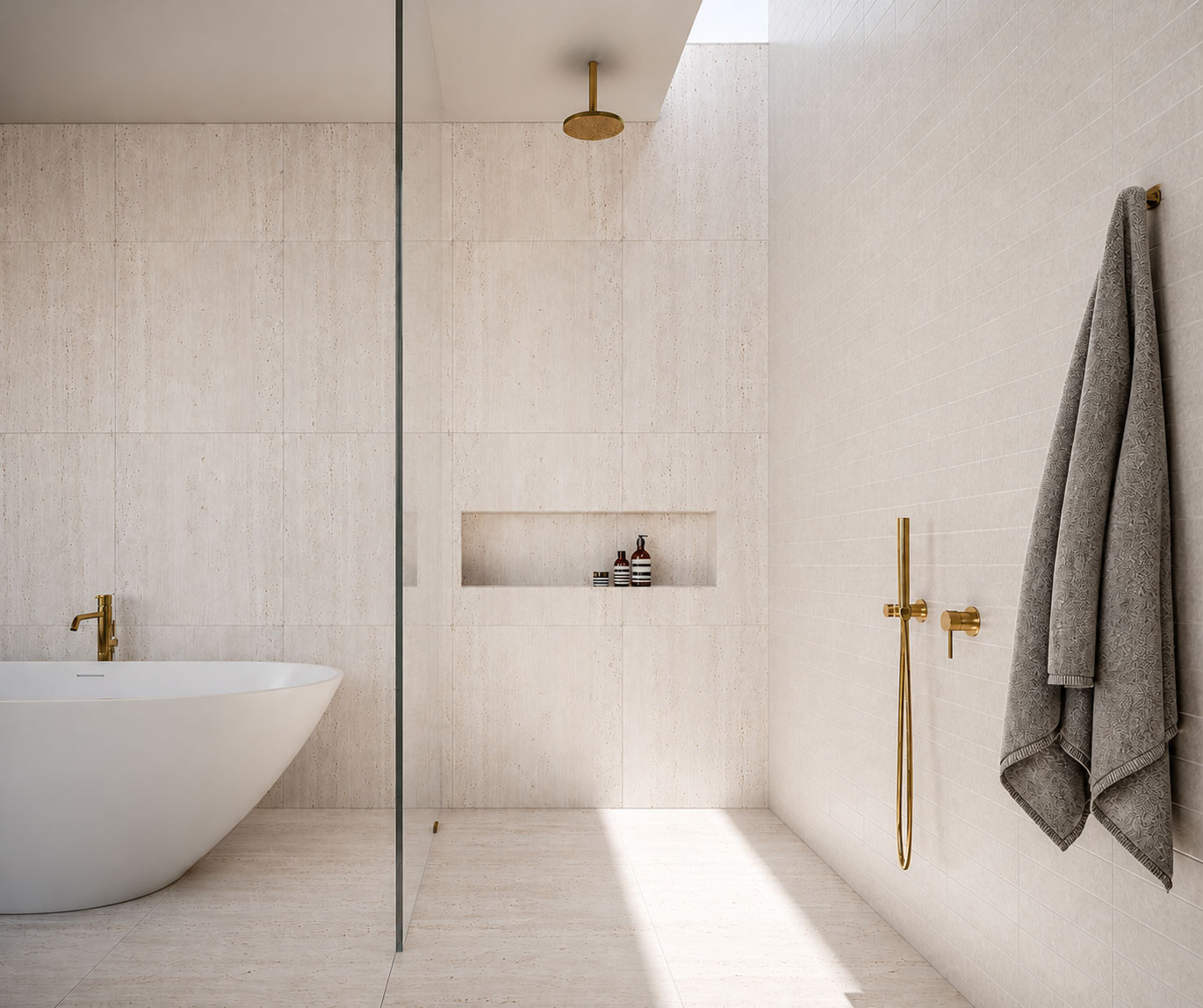
Modern Bathroom Design — A Question of Reduction
Modern bathroom design is often misunderstood as a style. In reality, it is a process of refinement.
It is the removal of excess. The alignment of elements. The calibration of tone and texture.
A resolved bathroom will typically express a singular, legible material palette; clear spatial hierarchy and movement; integrated, non-intrusive lighting; and a sense of visual quiet.
What is absent is as important as what remains.
Stone as Surface — Weight, Permanence, Stillness
Natural stone introduces a sense of permanence—an anchoring element within an otherwise refined space. Used well, it is not decorative, but architectural.
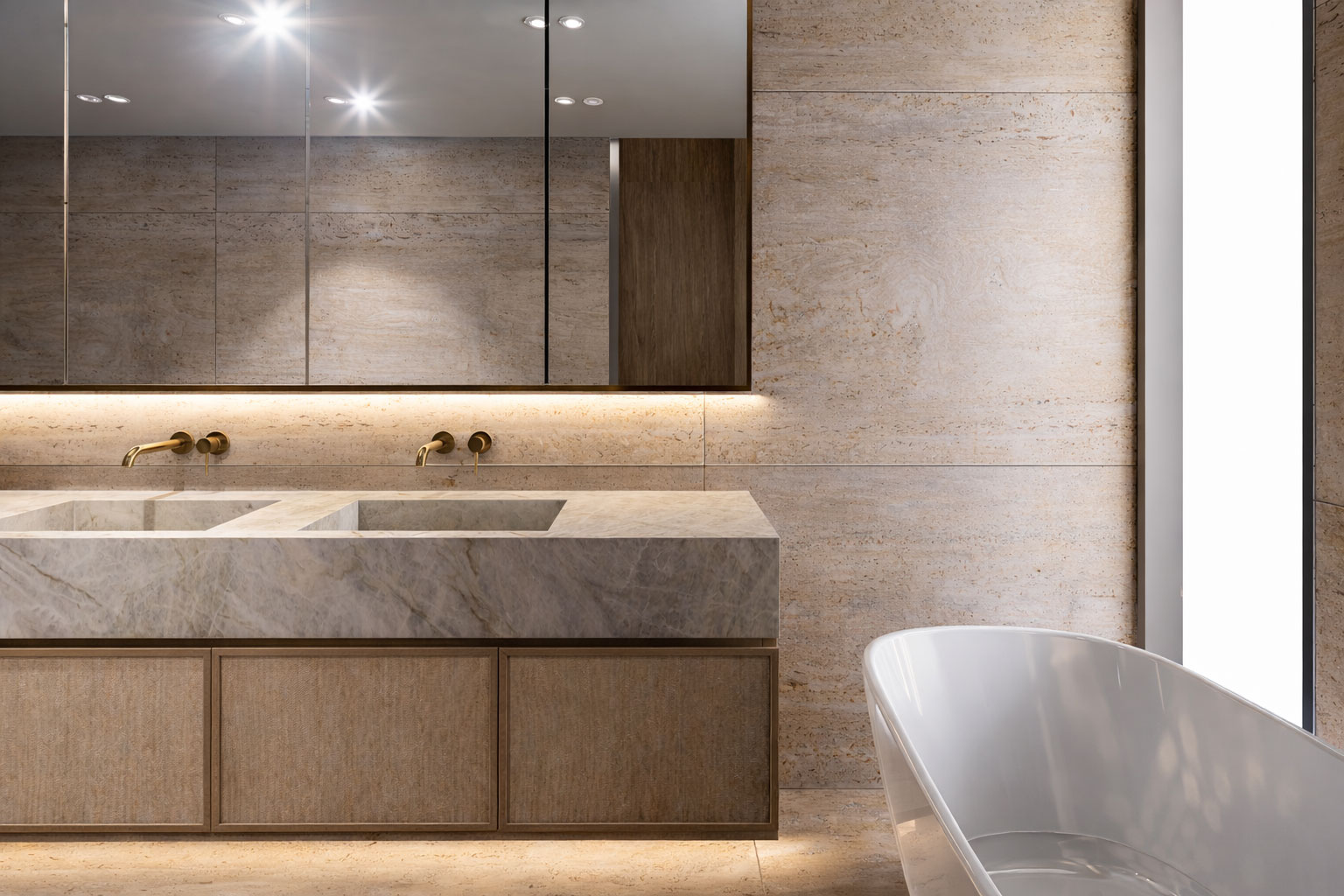
Rather than dispersing stone across multiple surfaces, we favour moments of concentration: a monolithic vanity carved from a single slab, full-height wall lining to frame a bath or shower, or a sculptural basin treated as an object within the room.
The intention is clarity. One material, expressed with conviction, will always feel more resolved than many competing finishes.
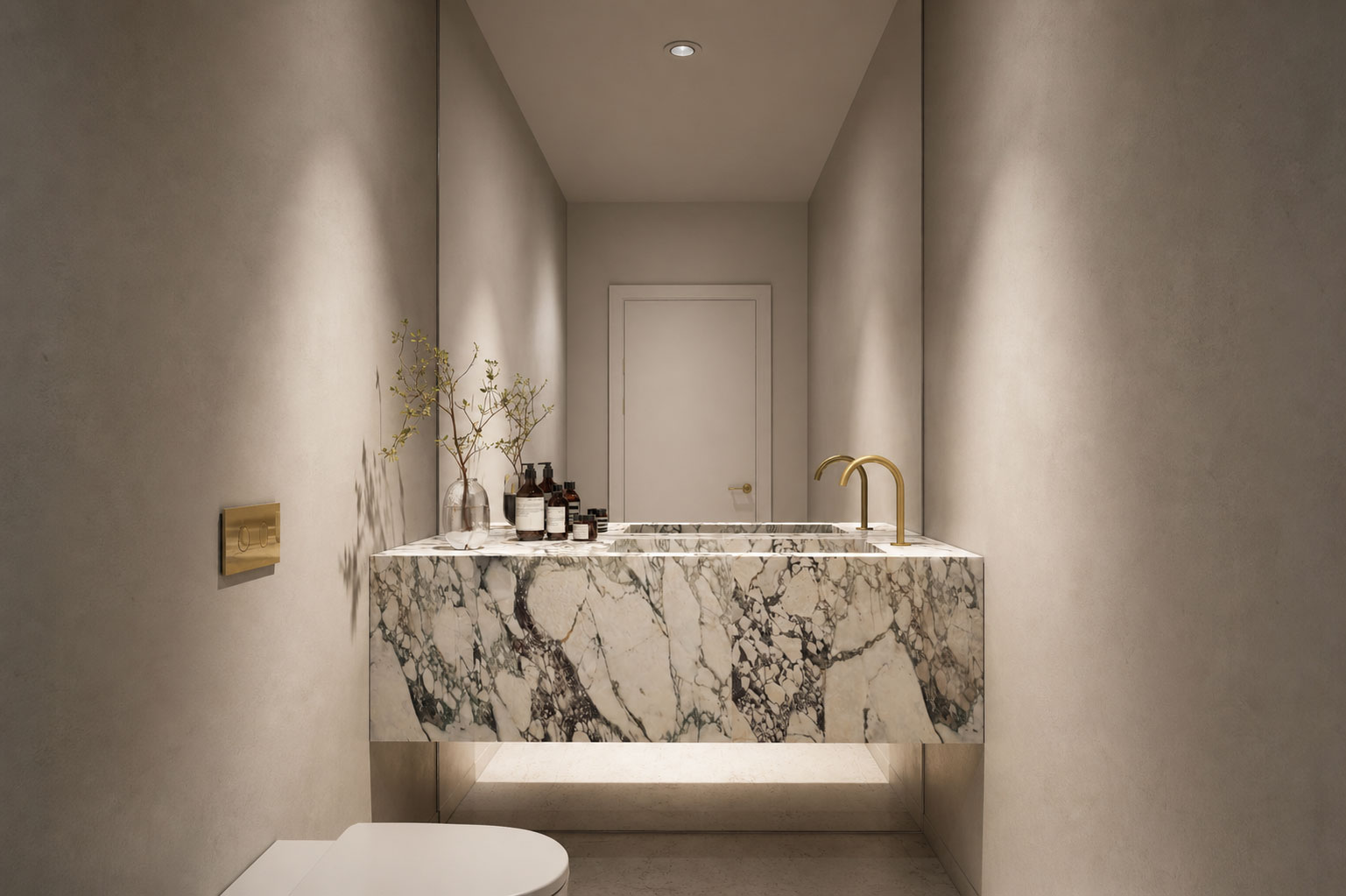
Tactility and Warmth — The Shift Toward the Natural
There is a clear movement away from high-gloss, overly polished interiors toward spaces that feel tactile and grounded.
Materials are selected for how they age, how they absorb light, how they feel to the touch: lime plaster and microcement, travertine and limestone, timber with visible grain, and muted, tonal palettes.
These bathrooms do not rely on contrast or ornament. They rely on nuance. They are quieter—and in that quietness, more enduring.
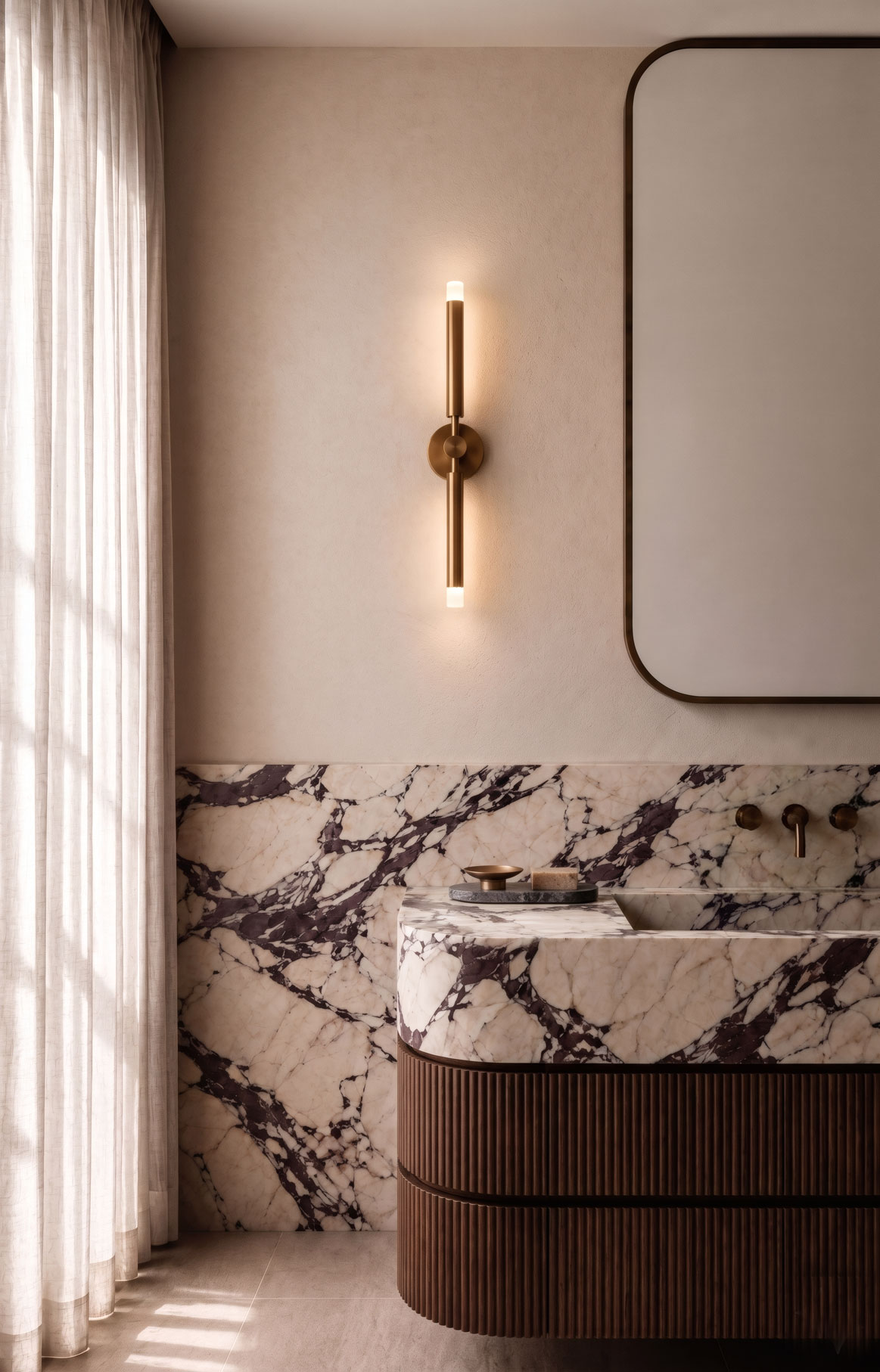
Continuity and Contrast — A Controlled Language
Where contrast is introduced, it is done with precision. A darker element—tapware, joinery, a recessed niche—can anchor an otherwise soft palette. But it must be intentional.
Equally, continuity plays a critical role: floors and walls expressed in the same material, fixtures aligned to a common datum, open showers without thresholds.
The result is spatial coherence—an environment that reads as a whole, not as a collection of parts.
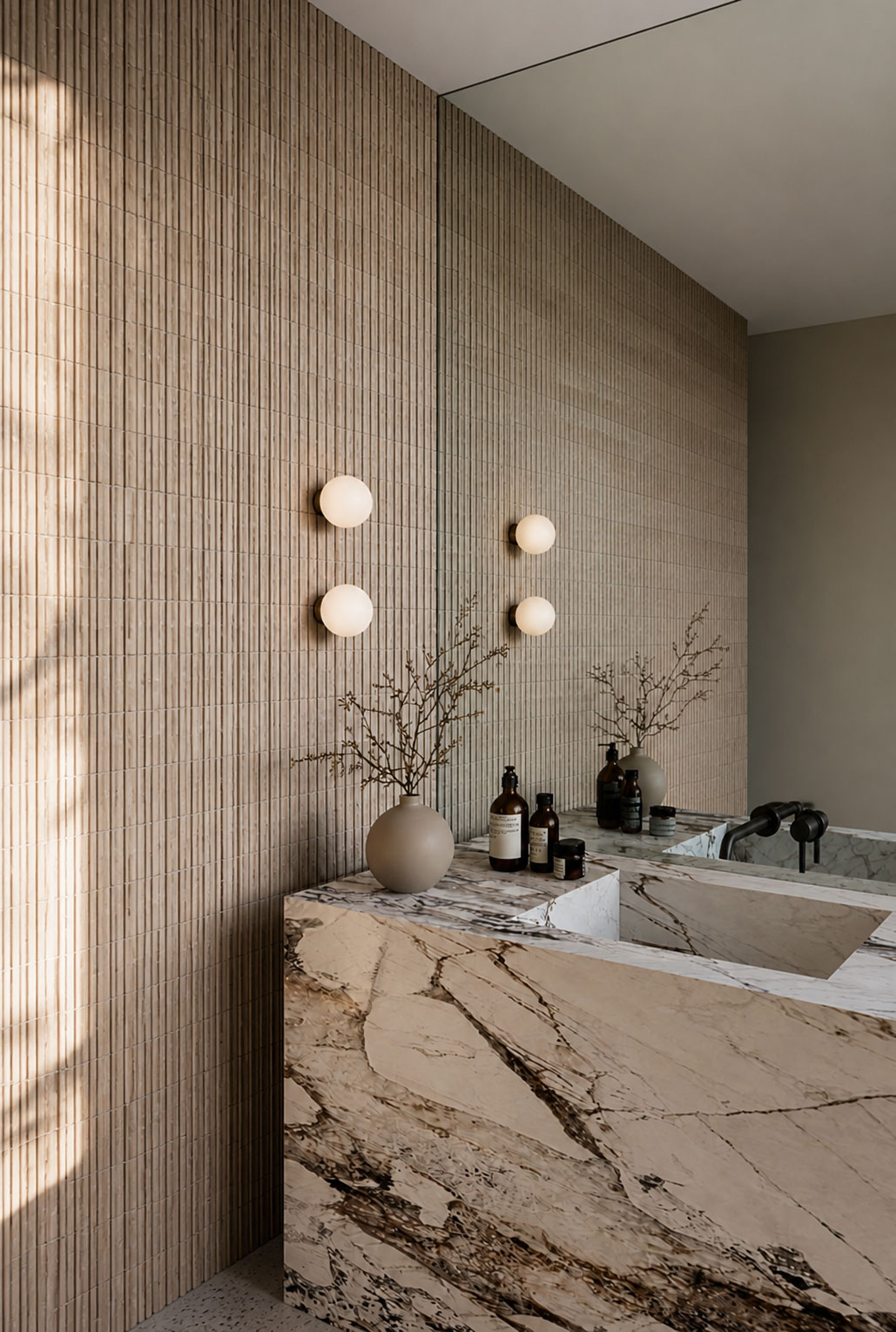
Light as a Material
Light is not an accessory to the bathroom—it is a primary material.
Natural light, where available, should be softened and diffused. Skylights, high-level windows, and filtered openings allow light to enter without glare.
Artificial lighting should recede: concealed LED strips, backlit mirrors, indirect ambient illumination. The aim is to eliminate harshness. The space should feel composed at all times of day.
The Bathhouse Influence — Space as Retreat
Increasingly, bathrooms are designed not as service rooms, but as places of retreat. This shift draws from global bathhouse traditions—spaces defined by ritual, stillness, and repetition.
In contemporary homes, this translates to freestanding baths positioned with intent, symmetrical or balanced compositions, soft immersive palettes, and reduced visual noise.
These are not expressive spaces. They are atmospheric ones.
Expression — Measured, Not Decorative
There is room for character—but it must be measured. A single gesture is often enough: a coloured stone basin, a curved mirror introducing softness, a textured surface within a controlled palette.
The discipline lies in stopping at the right moment. Restraint is what allows these elements to hold presence.
Compact Spaces — Precision Over Quantity
In smaller bathrooms, clarity becomes even more critical. Every decision carries weight.
We prioritise wall-hung elements to free the floor plane, continuous materials to avoid visual fragmentation, integrated storage to reduce clutter, and simplified geometries.
A small bathroom, resolved well, can feel more refined than a larger, unresolved one.
Toward Timelessness
The most successful modern bathrooms resist the urgency of trends. They are not defined by a moment, but by a position—one that values proportion, material honesty, and longevity.
These spaces do not seek attention. They reward it.
A Considered Approach
At Mike and Morlly Architects, our work is grounded in the belief that architecture should feel calm, resolved, and enduring.
Bathrooms are no exception. They are an opportunity to create stillness within the home—a space where material, light, and proportion are held in careful balance.
If you are exploring modern bathroom ideas in Sydney or Melbourne, the most valuable decision is not what to include, but what to refine.
Enquire to begin a more considered, design-led process.
Enquire to begin a more considered, design-led process.