Colour does not always need to be applied to an interior. Often, it is already present within the materials themselves. The mineral tones of natural stone, the warmth and grain of timber, the patina of metal and the pattern of wallpaper can collectively establish the character of a space.
Material as a Response to Place
Rather than treating colour as a decorative layer introduced at the end of the design process, we consider it alongside material, texture and light from the outset. At Mike and Morlly Architects + Interiors, material selection forms part of the architectural experience of a home. A material is selected not simply for how it looks, but for the atmosphere it can create, how it responds to light and how it contributes to a broader sense of place.
For a coastal home, the connection to its setting does not need to be literal. Rather than relying on a conventional palette of blue and white or recognisably nautical elements, coastal character can emerge more subtly through natural materials, mineral colours, texture and light.
In this ensuite, Aquamarine Quartzite was selected as the defining stone. Its soft blue-green mineral tones subtly reference the changing colours of the water, while the natural movement and variation within the stone introduce depth and individuality.
The Aquamarine is balanced by warm, sandy neutrals, pale timber and brushed brass. Natural light entering from above changes the appearance of these materials throughout the day, at times bringing forward the cooler green tones of the stone and at others revealing its softer grey and warm mineral undertones. The connection to the coast is present, but deliberately abstract rather than thematic.
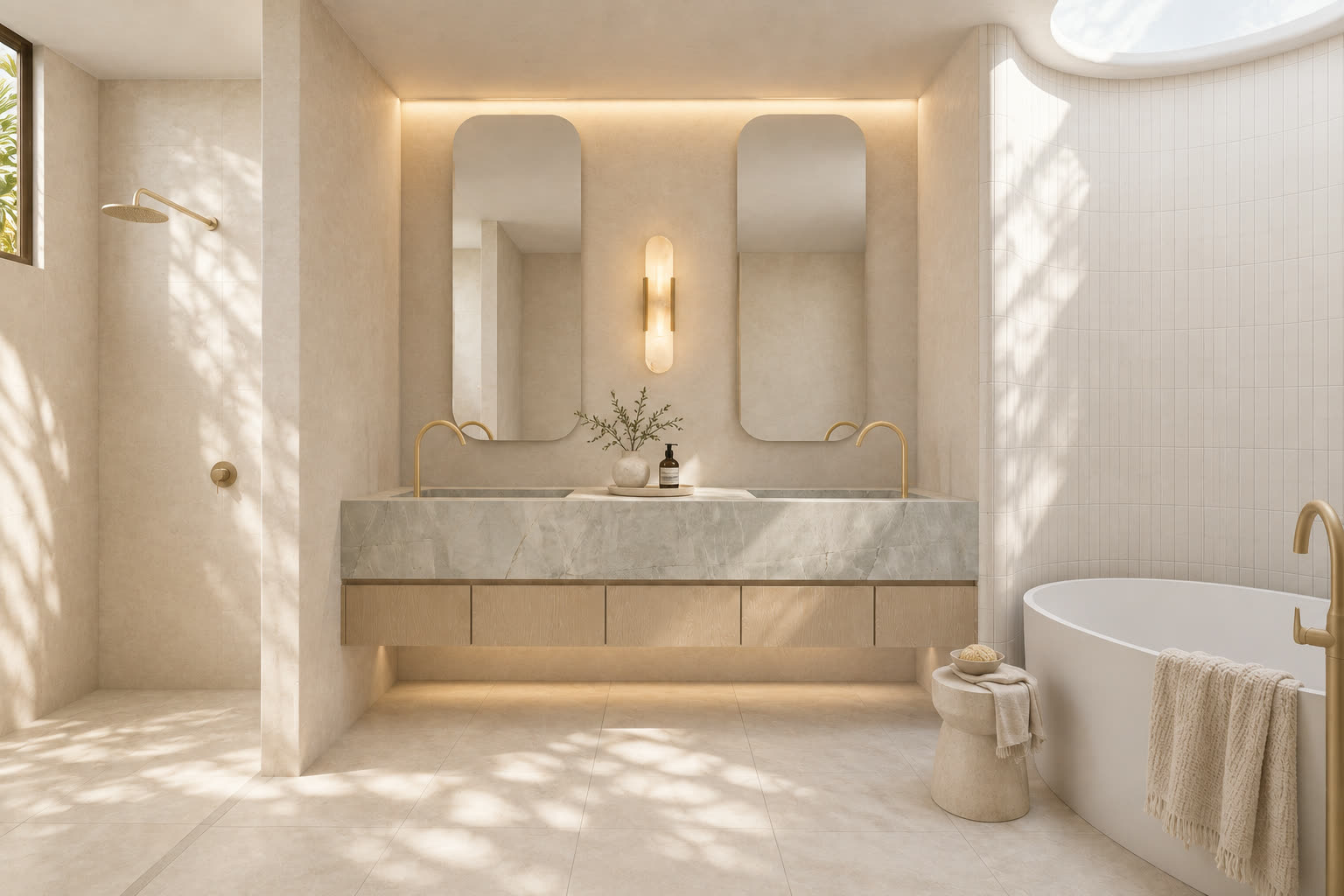
Aquamarine Quartzite introduces subtle blue-green mineral tones into a warm and restrained coastal palette.
Colour Through Material
There is a distinction between adding colour to an interior and selecting a material that inherently carries colour. Natural stone has a complexity that is difficult to replicate through a uniform surface. Veining changes direction, mineral deposits introduce unexpected tonal variation and each slab has its own individual composition.
This makes stone a natural starting point for developing a broader interior palette. In the ensuite, the Aquamarine Quartzite establishes the cooler notes within the room. Surrounding finishes remain intentionally restrained, allowing the colour and movement of the stone to become more apparent.
Rather than competing with it, warm off-whites, pale timber and brushed brass respond to the quieter tones contained within the stone. The result is calm and coastal in character without relying on obvious coastal motifs — an approach we carry through our interior architecture and interior design work.
Creating Moments of Contrast
Not every room within a home needs to evoke the same atmosphere. While primary spaces may be light, open and restrained, smaller rooms offer an opportunity to create moments of contrast and a different emotional experience.
In the powder room, Grigio Orobico marble establishes a deeper and more intimate mood. Its expressive movement and layers of charcoal, grey and warm brown create a sense of richness, complemented by warm brass and botanical wallpaper.
Rather than attempting to make the small room appear larger or brighter, its scale is embraced. The darker palette creates an enveloping quality, allowing the powder room to become a distinct moment within the home.
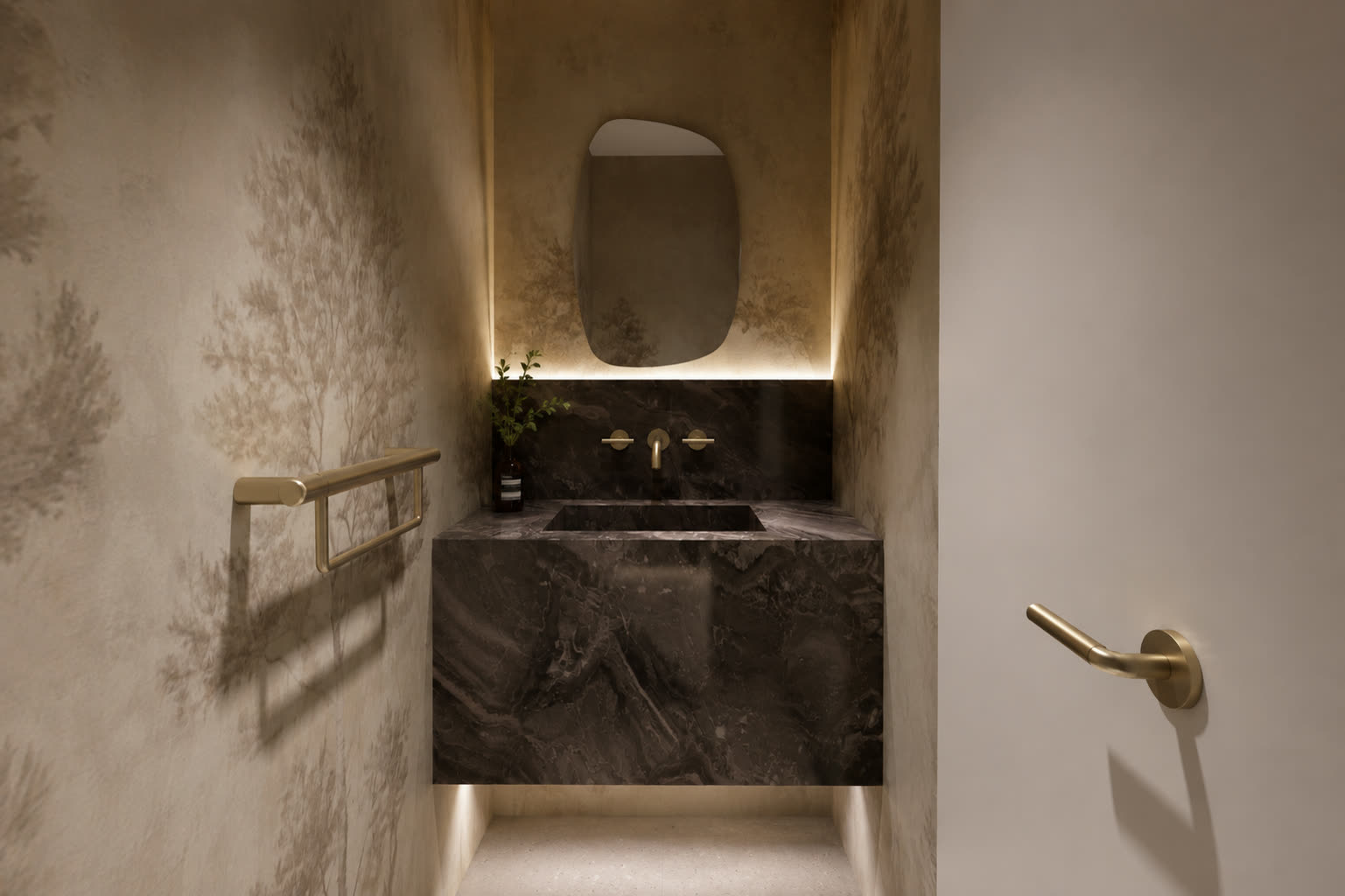
Grigio Orobico, botanical wallpaper and warm brass create an intimate and layered material palette.
Pattern, Texture and the Role of Wallpaper
Materiality extends beyond stone and timber. Wallpaper can introduce pattern, colour and tactility in a very different way, particularly within spaces where a more expressive and immersive response is appropriate.
In the powder room, the botanical wallpaper was considered as part of the material composition rather than as decoration applied afterwards. Its soft, organic imagery provides a counterpoint to the strength and movement of the Grigio Orobico. Muted earthy tones connect with the warmer veins within the marble, while the botanical pattern introduces softness and another layer of movement.
Under warm, subdued lighting, the relationship between pattern and material changes again. Portions of the wallpaper recede while the stone catches the light, allowing the room to reveal itself differently depending on how it is experienced.
The stone provides depth and permanence. The wallpaper introduces softness and pattern. Brass brings warmth. Together, these elements establish the atmosphere of the room.
Allowing One Material to Lead
Expressive materials are often most effective when they are given space to be noticed. In the laundry, Tiffany stone introduces a very different expression of natural colour. Its distinctive green hue and flowing veining bring richness and movement to an otherwise functional space.
Rather than introducing green through paint or an applied decorative finish, the colour is inherent within the material itself. Used across the benchtop, deep apron and splashback, the Tiffany stone reads as a singular architectural element. Pale timber joinery provides a restrained and warmer backdrop, allowing the green mineral tones to become more pronounced.
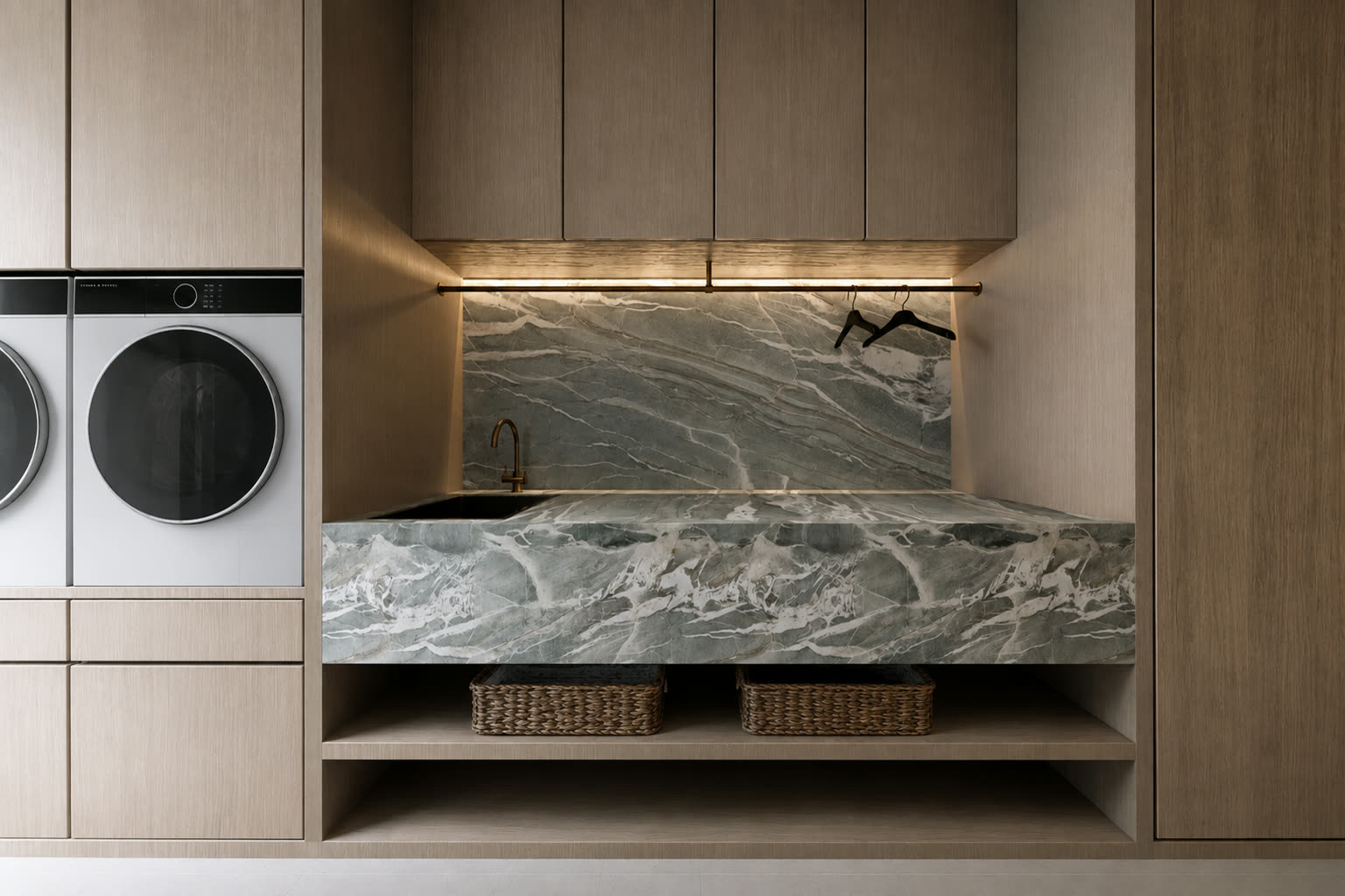
Tiffany stone introduces a natural green hue and expressive movement against restrained pale timber joinery.
There is also a subtle relationship between the Tiffany stone and the Aquamarine Quartzite used elsewhere in the home. The materials are not intended to match. Instead, related green and blue-green mineral tones appear through different stones and in different intensities. This creates a sense of continuity between spaces without requiring the same finish to be repeated throughout the home.
It is a quieter way of carrying colour through an interior — through relationships rather than repetition.
Designing with Light
Colour and material cannot be considered independently from light. Natural stone can change considerably throughout the day. Daylight may reveal mineral colours that appear almost absent under artificial illumination, while warmer evening lighting can bring forward cream, brown and amber undertones.
Finish also changes this relationship. A polished stone reflects its surroundings and light, often giving it a more dramatic quality. A honed surface absorbs light differently and can feel softer and quieter. Textured walls create subtle shadow, timber grain becomes more pronounced under directional light, and metallic finishes introduce small moments of reflection and warmth.
The Aquamarine Quartzite is particularly responsive to these changes. Under natural daylight, its cooler blue-green qualities become more apparent. Against warm ambient lighting and surrounding neutral finishes, the stone takes on a softer character.
For this reason, we consider material, colour, texture and light as one composition rather than a series of independent selections — a principle explored further in our article on designing with natural light.
A Quieter Interpretation of Coastal Design
Coastal design does not need to announce itself. A connection to place can instead be communicated through atmosphere: natural light, tactile surfaces, mineral colour and materials that subtly reference the surrounding landscape.
Aquamarine Quartzite can suggest the colour and movement of water without becoming overtly blue. Tiffany stone introduces a deeper botanical green. Warm textured finishes can recall sand and weathered coastal surfaces, while pale timber brings warmth and softness.
These references are subtle individually, but collectively they establish a sense of place. This approach allows a coastal interior to feel refined and enduring rather than themed. A similar restraint informs our design-driven approach to bathrooms.
Material as Atmosphere
Ultimately, material selection is about more than assembling finishes that work well together. It is an opportunity to give individual spaces their own character.
Aquamarine Quartzite creates a sense of calm and connection to the home’s coastal setting. Grigio Orobico transforms the powder room into something darker, richer and more intimate. Tiffany stone brings a natural green hue and expressive movement into the laundry. Botanical wallpaper introduces pattern and softness, while timber and brass provide warmth and continuity.
These spaces do not need to look identical to belong to the same home. What connects them is a consistent approach to materiality and an understanding of how colour, texture, pattern and light influence the way a room is experienced.
Rather than beginning with a colour palette, we begin with atmosphere — considering how each space should feel, and allowing the materials to shape that experience. You can see this across our selected works, and in our Sydney and Melbourne residential projects.
Mike and Morlly Architects + Interiors is an architecture and interior design studio working across Sydney and Melbourne, creating considered residential interiors shaped by material, context and place.
Planning an interior or residential project? Talk to our architecture and interiors team about creating a home shaped around material, atmosphere and place.
Planning an interior or residential project? Talk to our architecture and interiors team about creating a home shaped around material, atmosphere and place.